• NOBLE KAVA
  • NO ALCOHOL
  • LAB TESTED
  • NO NICOTINE
  • VANUATU SOURCED
  • CO₂ EXTRACTED
Kava leaf and root line drawing on kraft brown

One root. Nothing hiding behind it.

Kava has been grown, shared, and trusted across the South Pacific for centuries. We start with noble kava root from Vanuatu, concentrate it with supercritical CO₂ extraction, and test every batch for heavy metals, pesticides, and microbials.

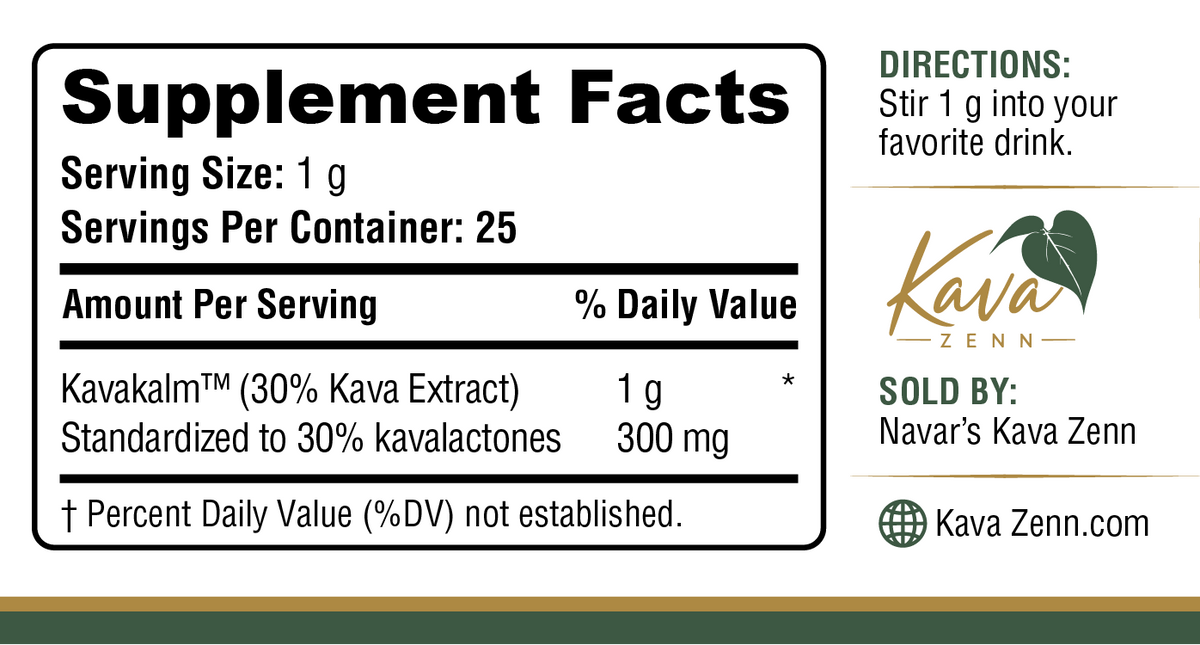
What you get is the working part of the plant — 300 mg of kavalactones in every gram — and the numbers on the jar are the numbers in the jar.

Read about kava
Concentric ripples in green on a sage background

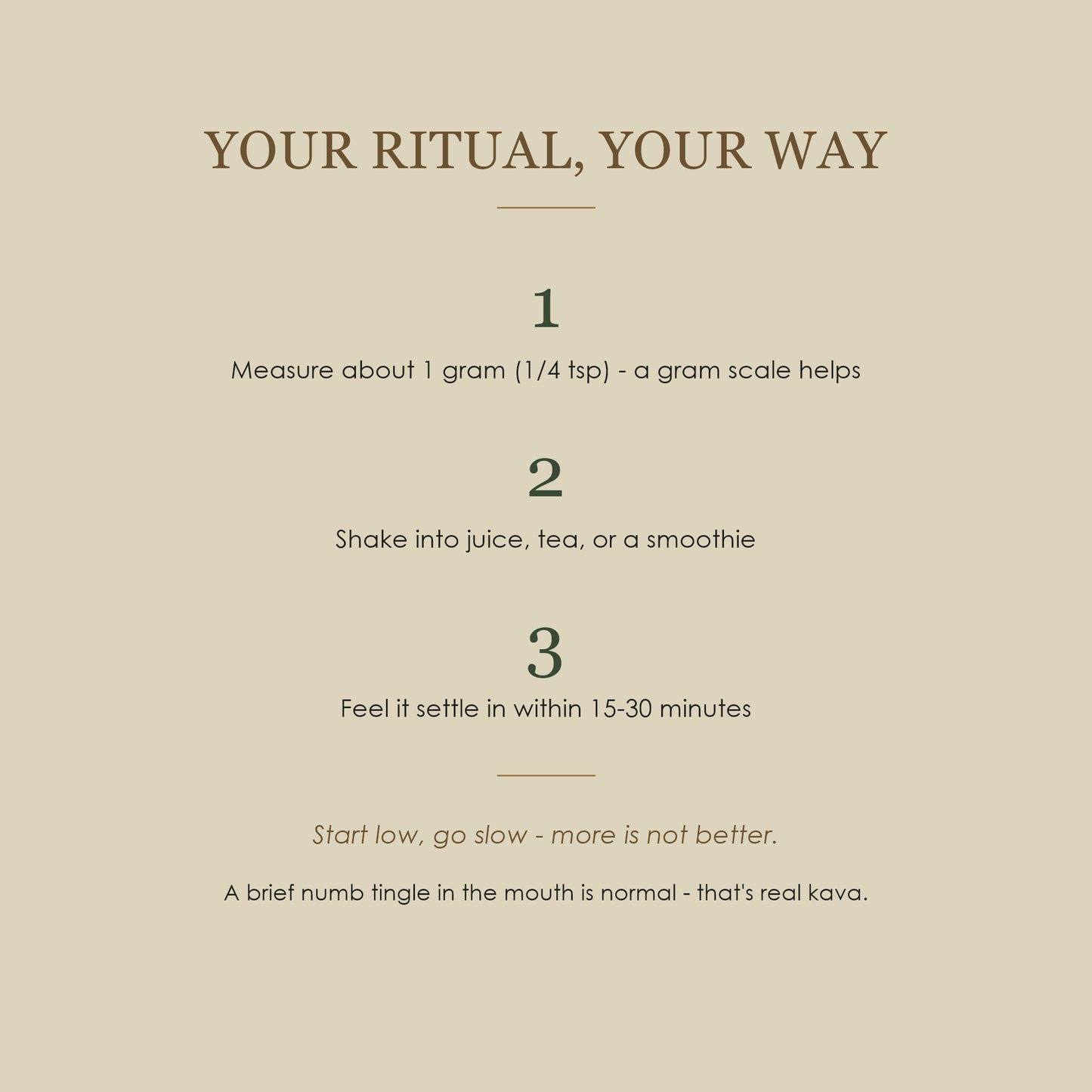
Your ritual, your way.

No straining, no kneading, no sink full of cleanup. Measure about a gram, shake it into juice, tea, or a smoothie, and give it fifteen to thirty minutes.

A brief numbing in the mouth is normal — it is how real kava announces itself. Start low and go slow: with kava, more is not better.

Five ways to mix it
  • No alcohol, no nicotine

    A way to unwind that leaves nothing to recover from in the morning.

  • Noble root from Vanuatu

    Grown in volcanic island soil, from the varieties Pacific growers cultivate for daily drinking.

  • CO₂ extracted, lab tested

    Supercritical CO₂ extraction and third-party testing on every batch. Certificate of Analysis on request.

  • Twenty-five honest servings

    25 grams, 25 one-gram servings, 300 mg of kavalactones each. We do not pad the count.

The details, up front

What's in it

One ingredient: a proprietary kava root extract (Piper methysticum, root, standardized to 30% kavalactones). Nothing added for flavour, colour, or sweetness.

The root is noble kava grown in Vanuatu and concentrated using supercritical CO₂ extraction. Every batch is third-party tested for heavy metals, pesticides, and microbials — all well within limits. We'll send you the Certificate of Analysis if you'd like to see it.

How to use it

Measure about 1 gram — roughly a quarter teaspoon. A small gram scale is worth having, since no scoop is included and the difference between a light and heavy quarter-teaspoon is real.

Shake or blend it into juice, tea, a smoothie, or a shaker bottle. Kava is earthy and bitter, so most people reach for pineapple or mango juice rather than plain water. It disperses better when you shake or froth it than when you stir.

Start low and go slow. More is not better — too much kava commonly brings on nausea. Give the first gram a full thirty minutes before deciding anything.

How it feels

First, a brief numbing or tingling in the mouth. That's normal, it passes within a few minutes, and it's the classic sign that you're drinking real kava.

Most people notice a calm, settled feeling in the body within 15 to 30 minutes, with a clear head rather than a foggy one. The strongest stretch is fairly short — roughly 20 to 40 minutes — and some people find a gentle calm lingers well past that.

Effects vary genuinely from person to person. Some people feel very little the first few times and more on later sessions. Food in your stomach will slow it down.

What to check before you buy any kava extract

These are the questions worth asking of any brand, including ours. Here is where we stand on each.

Feature Kava Zenn Commonly seen
Kavalactone strength 30%, stated on the jar Not always disclosed
Servings per container 25 real 1 g servings Sometimes counted at doses too small to feel
Root variety Noble kava Often unstated
Country of origin Vanuatu Often unstated
Extraction method Supercritical CO₂ Varies, often unstated
Third-party lab testing Every batch, COA on request Varies by brand
Packaging Recyclable kraft cardboard jar Commonly plastic

Based on publicly available product listings across the category. Practices vary by brand — check each one yourself.

  • The Island Standard

    1 g shaken into 6–8 oz of cold pineapple juice. The acidity and sweetness cover kava's bitterness better than almost anything else.

  • The Zenn Spritz

    Disperse 1 g in a splash of warm water, top with cold sparkling water, and squeeze in lime or grapefruit.

  • The Warm Wind-Down

    Whisk 1 g into warm chamomile, lemongrass, or ginger tea with a spoon of honey. The ritual does half the work.

1 of 3

You asked. We answered.

What is kava?

Kava is a plant in the pepper family grown across the South Pacific islands. Its root has been prepared as a traditional drink for centuries — for ceremony, for conversation, and for winding down at the end of a day. The active compounds are called kavalactones.

How much should I take?

Start with about 1 gram, roughly a quarter teaspoon. A gram scale is recommended. Start low and go slow — more is not better, and too much commonly causes nausea.

Why does my mouth go numb?

That tingling numbness is caused by the kavalactones themselves. It is completely normal, passes within a few minutes, and is a classic sign that you are drinking real kava.

Is kava legal?

Yes. Kava is legal to buy, sell, and consume in the United States as a dietary supplement.

Can I take kava with alcohol or medication?

Do not combine kava with alcohol or sedatives. If you take any medication — especially anything affecting the liver or nervous system — speak with a healthcare professional before using kava. The FDA advises that a potential risk of rare, but severe, liver injury may be associated with kava-containing supplements.

What does it taste like?

Earthy, peppery, and bitter — we are not going to pretend otherwise. Most people mix it into fruit juice or a flavoured tea rather than drinking it in plain water.